National Public Health Intelligence Information System (NPHIIS)
Strengthening Kenya’s Outbreak Detection and Surveillance
About the Project
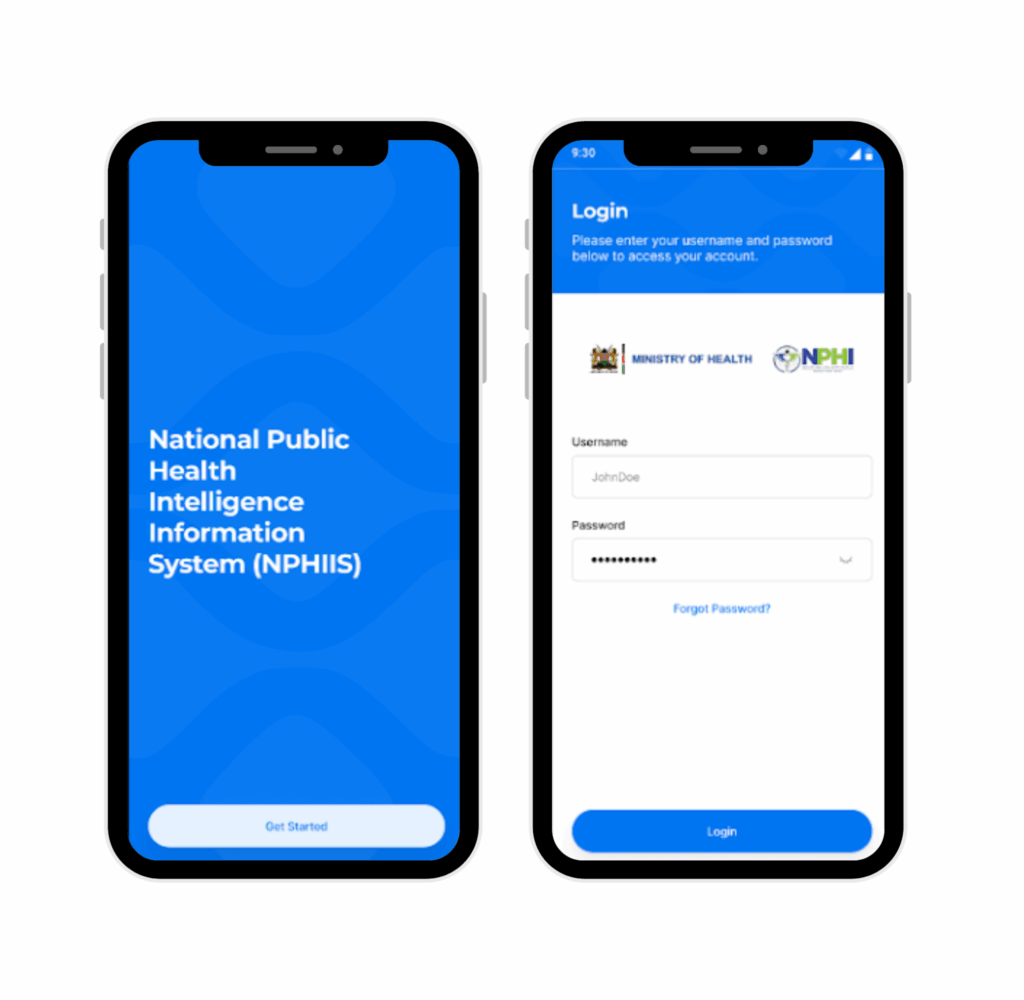
In public health, timely response is the boundary between containment and crisis. Historically, reliance on paper-based surveillance reporting has delayed the collection and analysis of critical case data. The National Public Health Intelligence Information System (NPHIIS) is a cutting-edge Android mobile application designed to digitize Kenya’s disease surveillance workflows, enabling end-to-end, real-time case reporting and automated outbreak detection.
Key Features and Innovations
● Digitization of 10+ Surveillance Tools: Replaces cumbersome, paper-based forms (MOH 502, 503, 505) with digital tools. Supported tools include Case Investigation Forms for notifiable conditions such as Acute Flaccid Paralysis (AFP) and Measles, weekly epidemic monitoring (MOH 505), Mpox tools, Visceral Leishmaniasis management and rumor tracking logs.
● Establishes direct data linking between field surveillance teams and laboratories (such as the KEMRI Laboratory Information System), enabling rapid lab-epidemiology linkages and reducing turnaround times.
● Instantly and automatically generates unique epidemiological (EPID) case numbers and populates digital line lists (MOH 503), eliminating manual compilation errors.
● Offline-to-Online Sync: Features robust offline-first data capture, allowing field officers to conduct case investigations in remote rural settings with intermittent connectivity and sync data automatically once a network becomes available.
● Real-time Analytics Dashboards: Synthesizes structured data into live, interactive dashboards integrated with Apache Superset to help county and national decision-makers monitor active outbreak signals.
Real-World Impact and Footprint
● Utilizing Google’s Open Health Stack allowed the development team to build and finalize the NPHIIS Minimum Viable Product (MVP) within just five business days, a process that normally takes up to three months under traditional methods.
● Successfully field-tested and deployed during the Mpox response campaign in September 2025 across Nakuru, Busia, and Mombasa counties, supporting over 216 frontline surveillance officers.
Clients and Partners
Co-developed by: Kenya National Public Health Institute (KNPHI)/Division of Disease Surveillance and Response (DDSR) and IntelliSOFT Consulting Limited.
Supporting Partners: The Task Force for Global Health, WHO, US CDC, and the Global Fund.